Rethinking Music Production Collaboration in 2026
Table of Contents
Music production collaboration is now inherently remote. This is true even when collaborators live in the same city. Clients review mixes at home, producers listen between sessions, and engineers work across irregular schedules. Whether distance is measured in miles or minutes, modern production workflows depend on asynchronous collaboration.
In 2026, the core challenge is no longer access to tools or technical capability. It is coordination—how files, feedback, decisions, and revisions move between people without friction or loss of context. Increasingly, collaboration and communication—not sound quality—have become the primary bottlenecks in music production.
The Accidental Workflow Stack
Most engineers already rely on a familiar set of tools: cloud storage (Google Drive, Dropbox, Sync.com, etc), email, messaging apps, shared documents (Google Docs), and DAW exports passed back and forth. These tools are capable, widely available, and deeply ingrained in daily practice.
The issue is not that these tools exist, but that they operate independently. Each solves a narrow problem, and collaboration happens in the gaps between them. Over time, this creates a workflow stack that is functional, but fragile.
The Hidden Cost: Collaboration as the Bottleneck
Fragmented collaboration introduces costs that are easy to underestimate because they do not appear on invoices.
Context switching between tools increases cognitive load and reduces focus during critical listening. Version ambiguity leads to avoidable clarification, rework, or incorrect assumptions. Feedback becomes detached from the audio it refers to, forcing engineers to interpret intent rather than act on precise instruction.
These issues compound as projects scale. More stakeholders, more revisions, and tighter timelines amplify friction. The result is slower decision-making, increased fatigue, and a workflow that depends heavily on personal vigilance rather than system support.
By 2026, it is clear that collaboration quality directly affects project outcomes. The workflow itself has become a limiting factor.
The Modern Music Collaboration Strategy in 2026
Modern music collaboration requires a shift from thinking in terms of individual tools to thinking in terms of systems.
Effective collaboration workflows need to support several interconnected requirements:
A single source of truth for files and versions
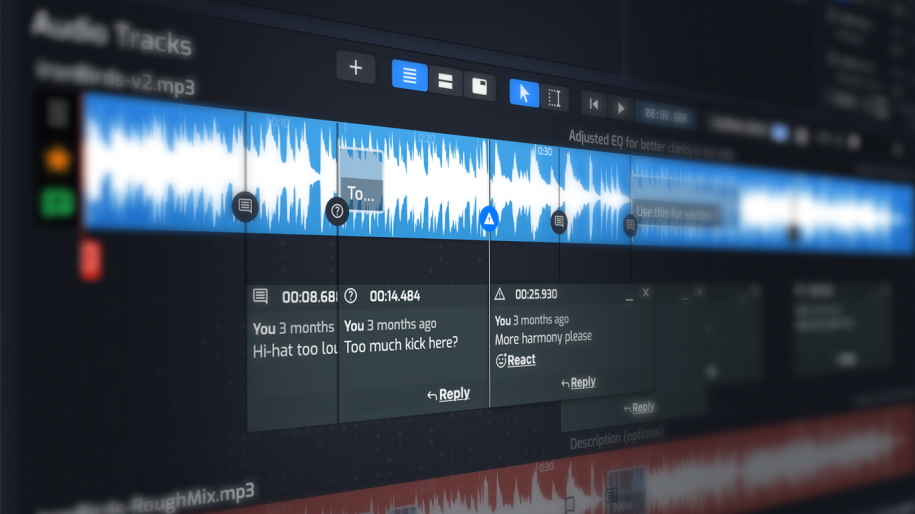
Feedback that is contextual, time-based, and persistent
Clear decision history that survives beyond individual messages
Reliable mix comparison without loudness bias
Structured communication that does not rely on inbox management
These are not independent needs. Files influence feedback. Feedback drives revisions. Revisions require comparison. Decisions need to be documented and communicated. Treating these as separate problems inevitably reintroduces friction.
From a workflow standpoint, the goal is not simply to make each step faster, but to ensure that information flows cleanly from one stage to the next. This is where integrated, all-in-one platforms provide real value. By supporting these needs within a single system, they reduce handoff errors, eliminate duplicated effort, and make the workflow more resilient under pressure.
The benefit is not convenience alone, but coherence.
Workflow Professionalism as Competitive Advantage
Sound quality remains essential, but it is no longer the sole differentiator. Clients now evaluate engineers based on the entire collaboration experience: organization, clarity, responsiveness, and delivery.
Stitched workflows place the burden of professionalism on the individual. They rely on consistent naming conventions, manual tracking, and personal discipline. This approach can work at small scale, but it breaks down as project volume increases or when collaborators change.
Unified workflows embed structure into the process itself. Best practices are enforced by design rather than memory. Communication is tied directly to assets. Progress is visible without constant status updates. The result is a workflow that scales without proportional increases in stress or error risk.
In this context, workflow design has become part of an engineer’s professional offering. It affects trust, retention, and long-term sustainability as much as technical skill.
Leading Music Production Collaboration Platforms in 2026
Several platforms now reflect this shift toward integrated collaboration.
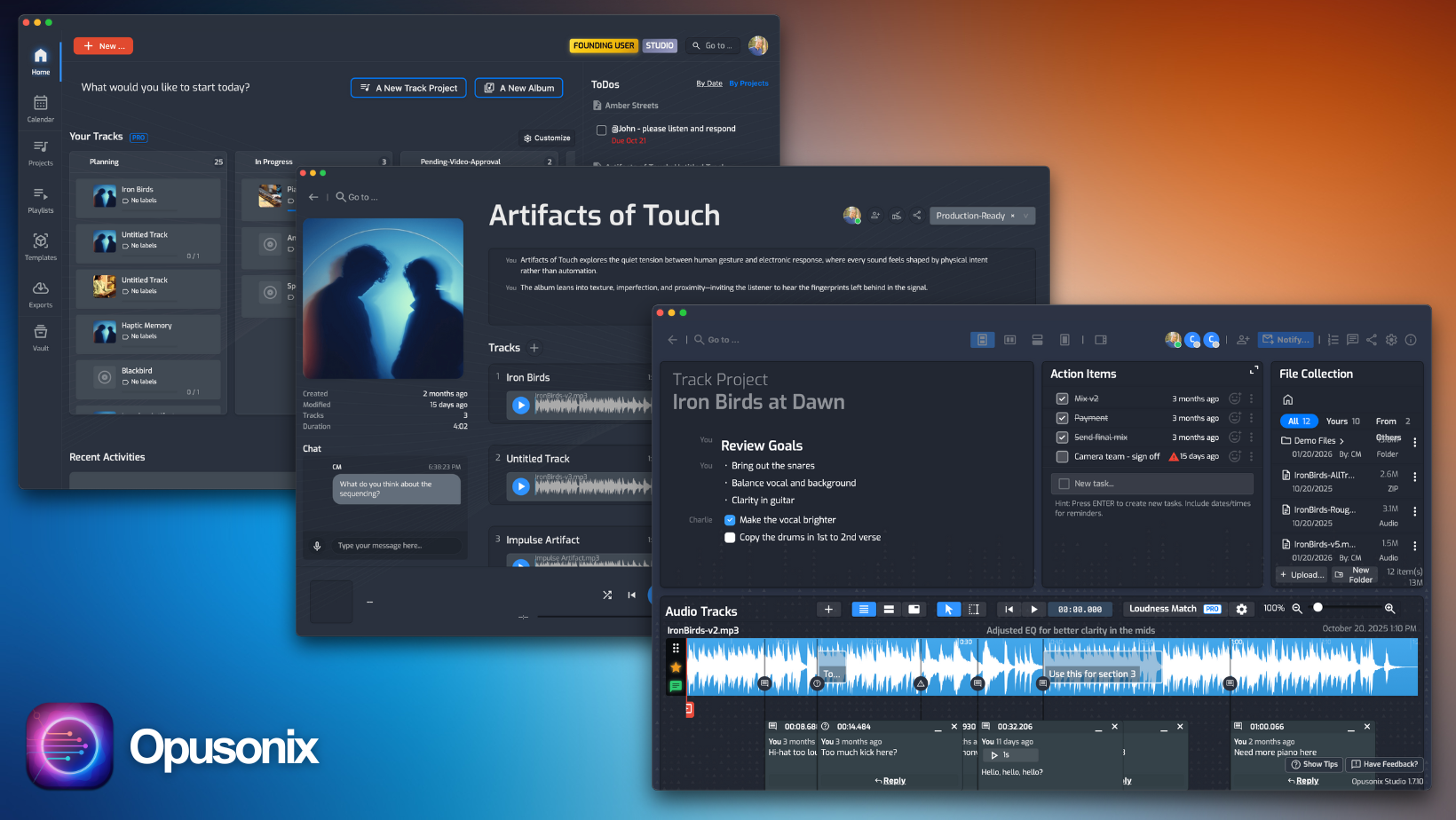
Opusonix approaches music production collaboration as a system-level problem. File exchange, timestamped feedback, mix comparison, communication, delivery, and project management are designed to work together within a single workspace. Collaboration is not an add-on, but the core organizing principle.
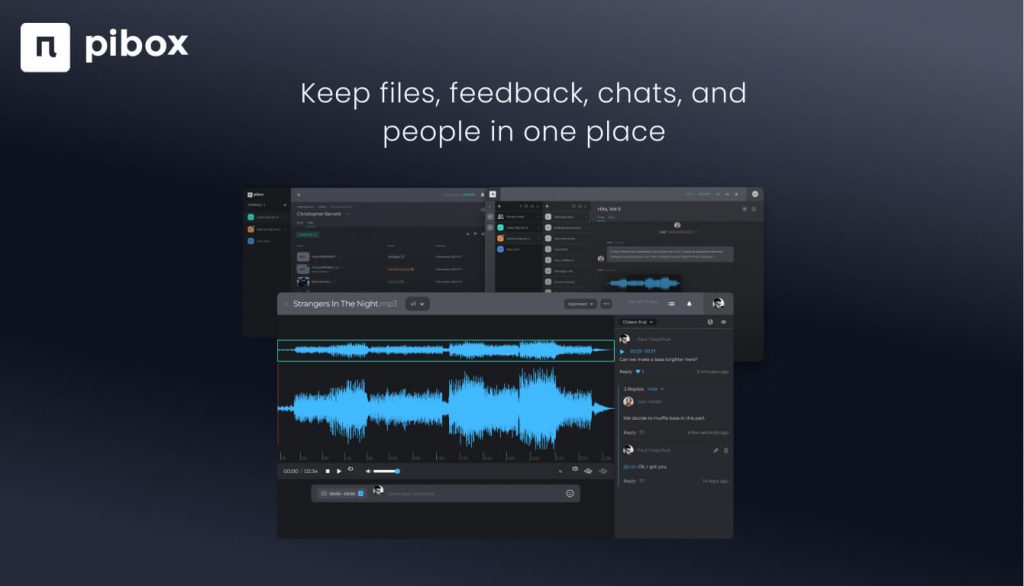
Pibox focuses primarily on feedback and client communication. It offers a streamlined way to collect and manage comments on audio, and is widely used for review and approval workflows.
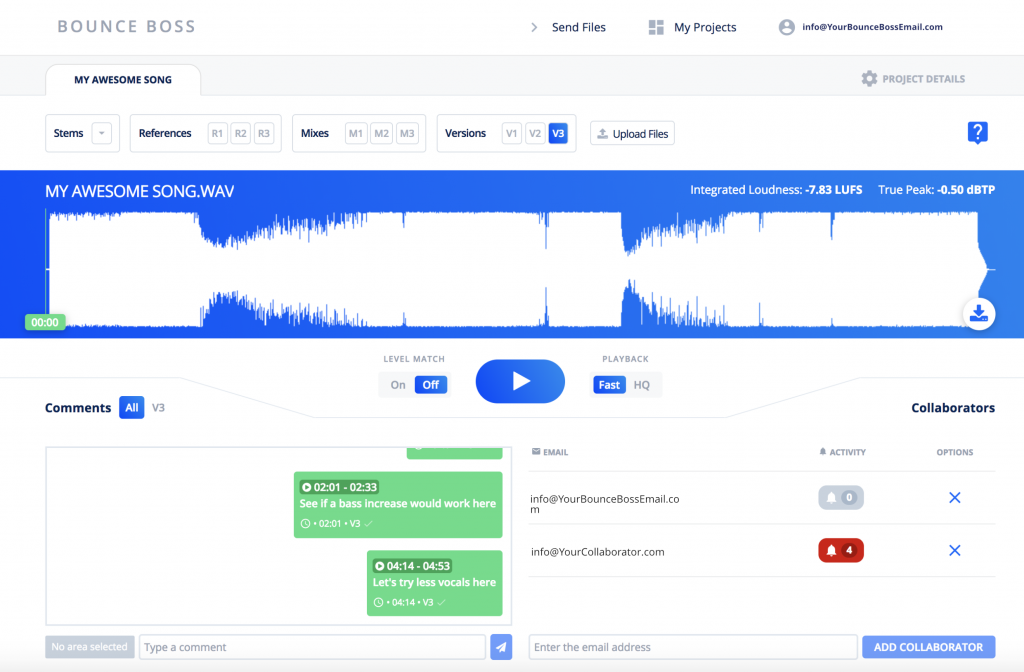
Bounceboss provides a simple and effective solution for sharing mixes and gathering feedback. It is well suited for straightforward collaboration scenarios where minimal overhead is preferred.
All three platforms support modern collaboration needs, but differ in scope, depth of integration, and workflow philosophy. The key distinction is whether collaboration is treated as a collection of features or as a unified system.
Collaboration Is Now Part of the Craft
Music production remains an art, but collaboration has become a technical discipline in its own right. In 2026, how decisions move through a project matters as much as how those decisions sound.
Unified collaboration platforms reduce friction, prevent common failure modes, and allow engineers to scale their work without scaling administrative burden. More importantly, they shift attention back to listening, judgment, and creative intent.
The future of music production belongs to engineers who design their collaboration workflows intentionally, rather than inheriting them by accident.